LA Film Museum. 2012. Bryony Roberts (professor). Rhino, V-ray, Illustrator, Photoshop.
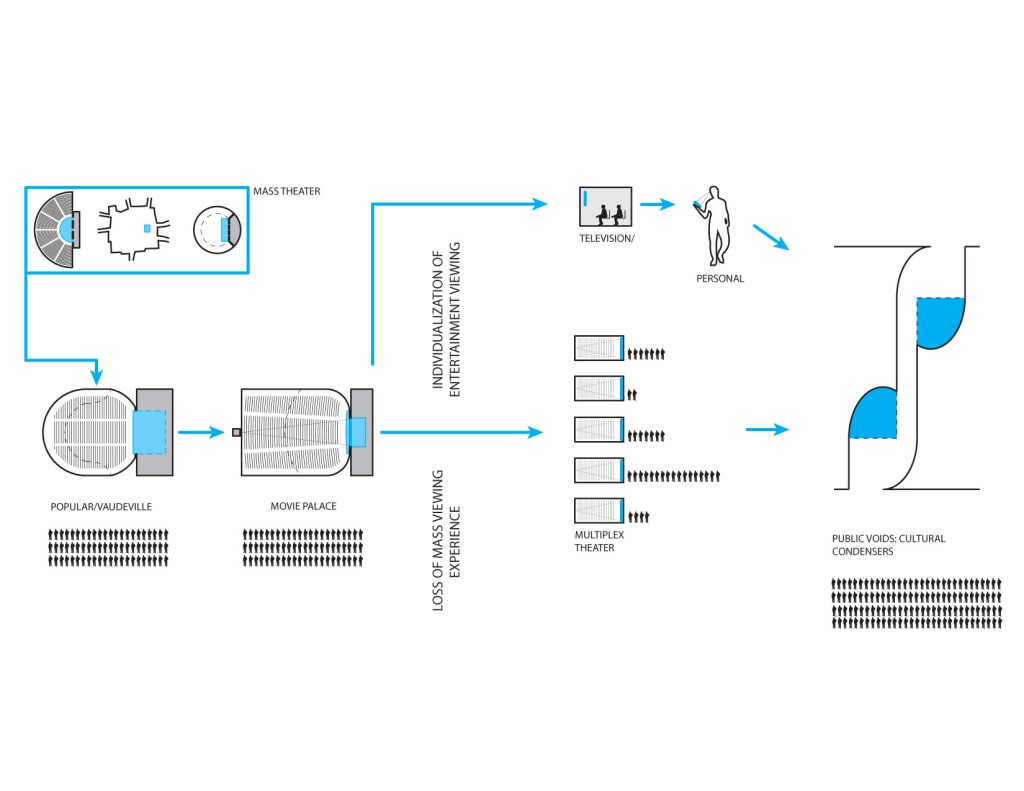
In the heyday of downtown LA’s theater district, the theaters on Broadway served as “social condensers”, bringing together different fragments of the public in a shared space and around the shared experience of cinema: now they only open for special events.
The LA Film Museum will recreate these social condensers in the form of public voids inserted into the site, which will become “cultural condensers”, bringing together the site’s different publics around a shared cultural experience.
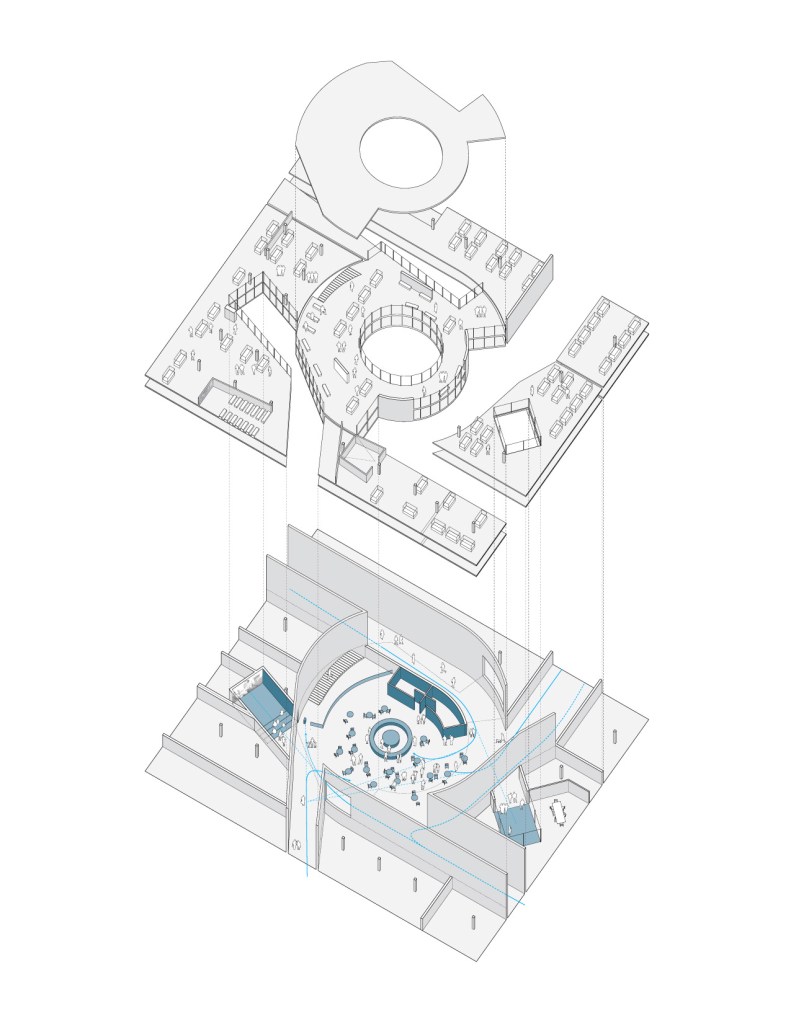
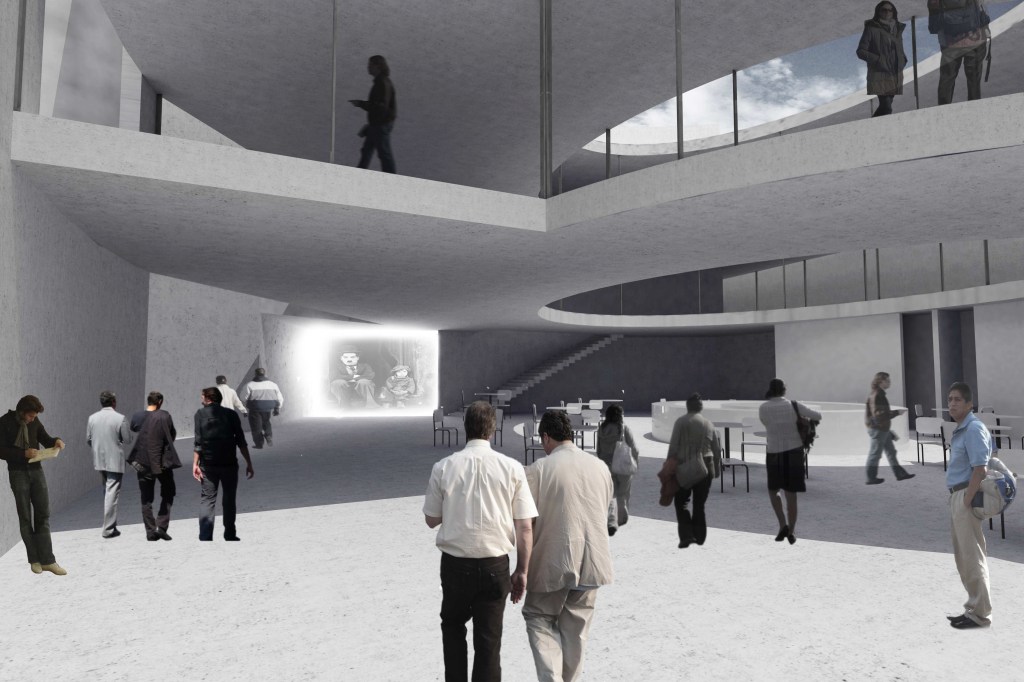
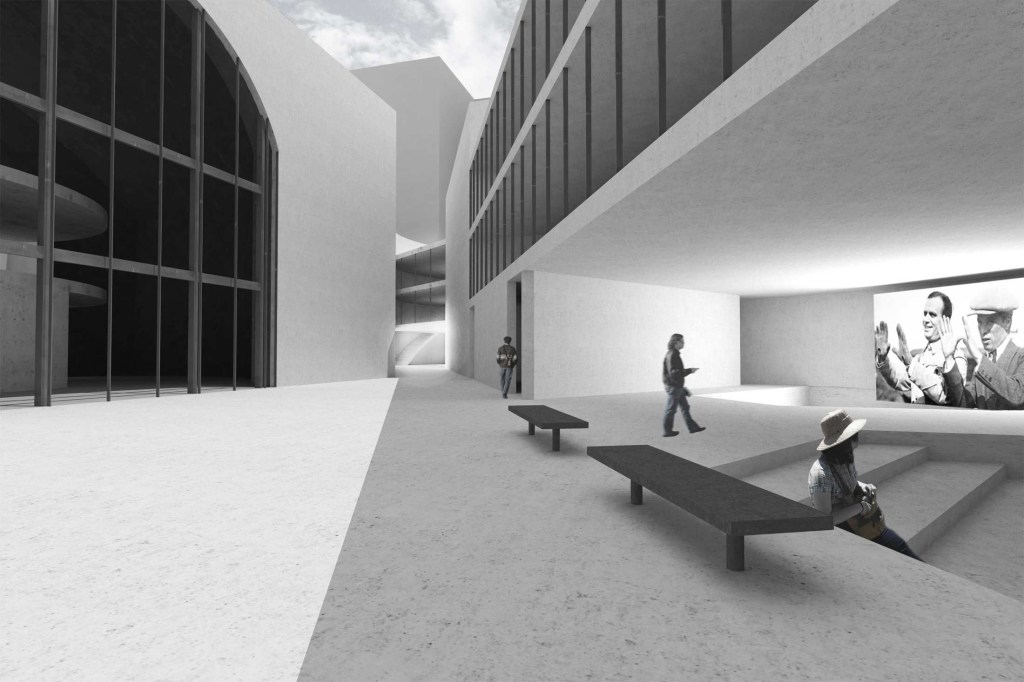
Each void contains a “theater”, or programmatic attractor, and a “lobby”, a space of slow movement designed for conversation. The voids are connected by “streets”, spaces of rapid linear movement. The programmatic attractors display museum program to the public free of charge. Each void serves as a museum entry point.
The project aims to add to, not take away from, the vibrancy of Broadway.
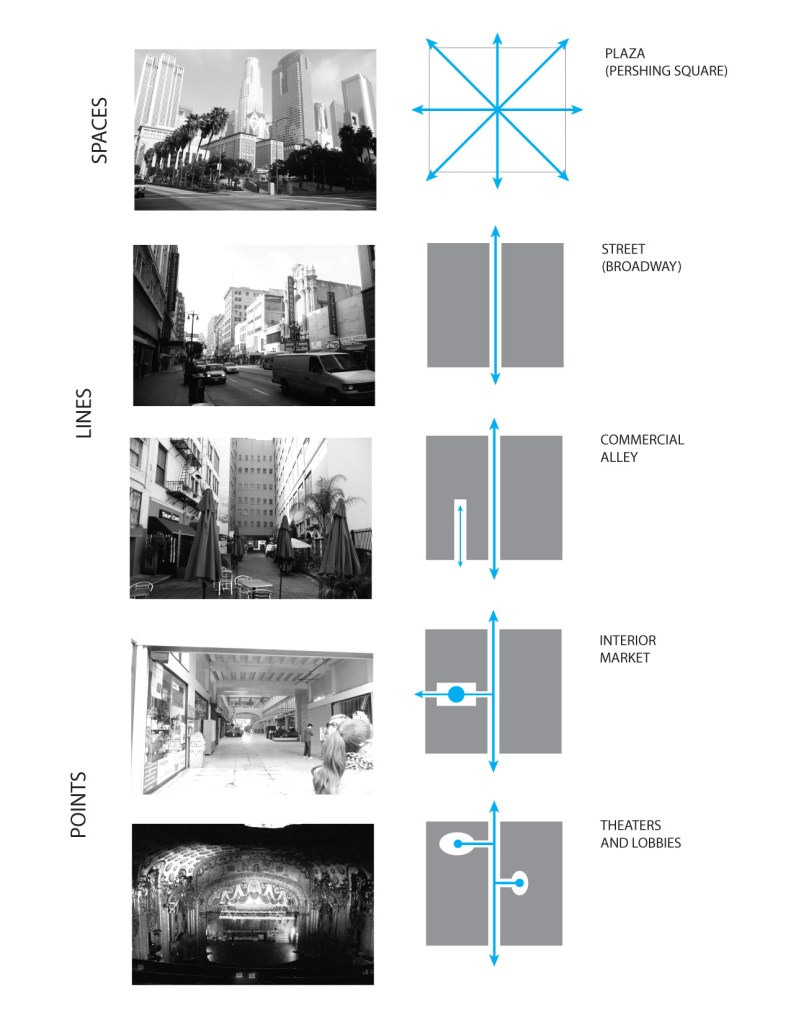
This project was driven by a careful analysis of the historical typology of cultural presentation through theater and film. It asks the question: is it possible to recover a shared experience of cultural presentation, given the tendency of culture to fragment into increasingly individualist forms?
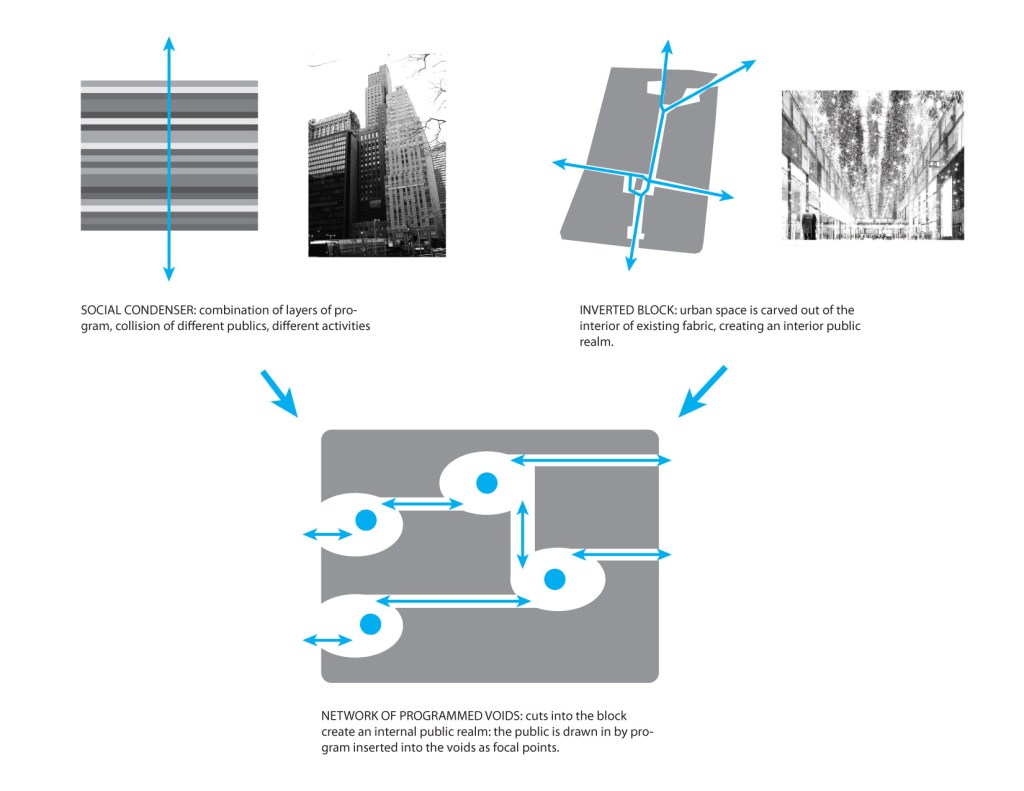
Typologically, the project draws on two ideas: the social condenser and the inverted block. The idea is to promote “collision” between different publics in a space sheltered from the street.
Voids in the urban fabric act as “cultural condensers”:


On street level, the voids act as a continuation of the public realm:
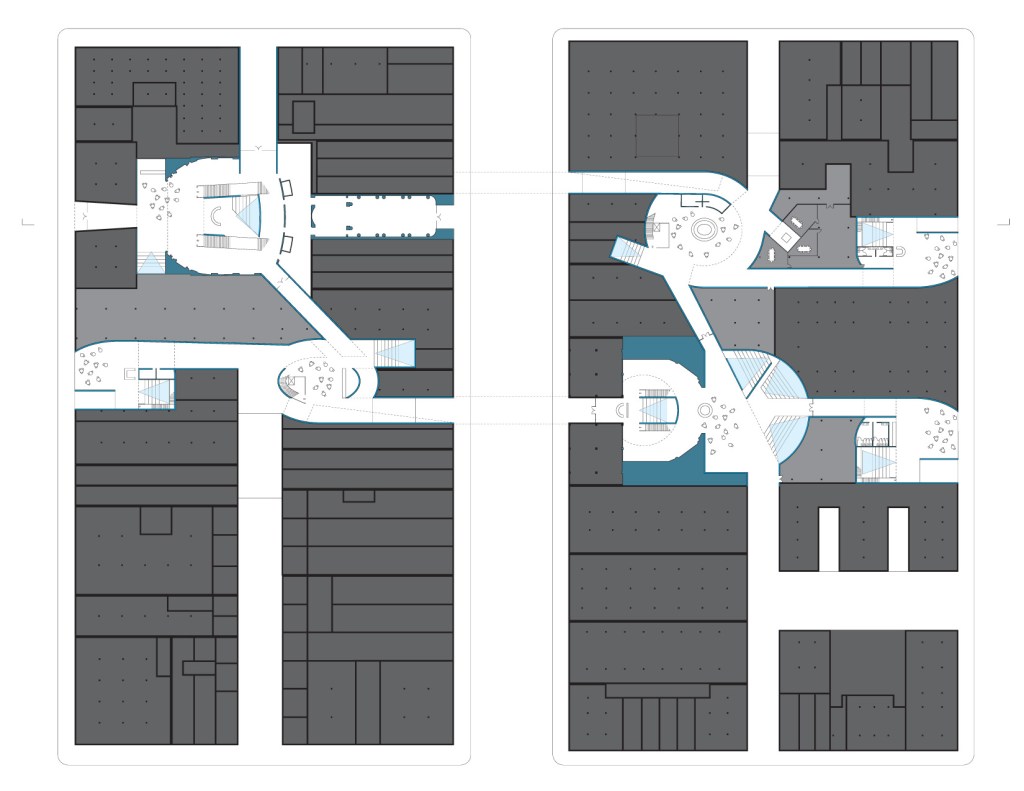
Above, on the museum level, the voids provide a vertical connection between the public realm below and the institutional realm above:
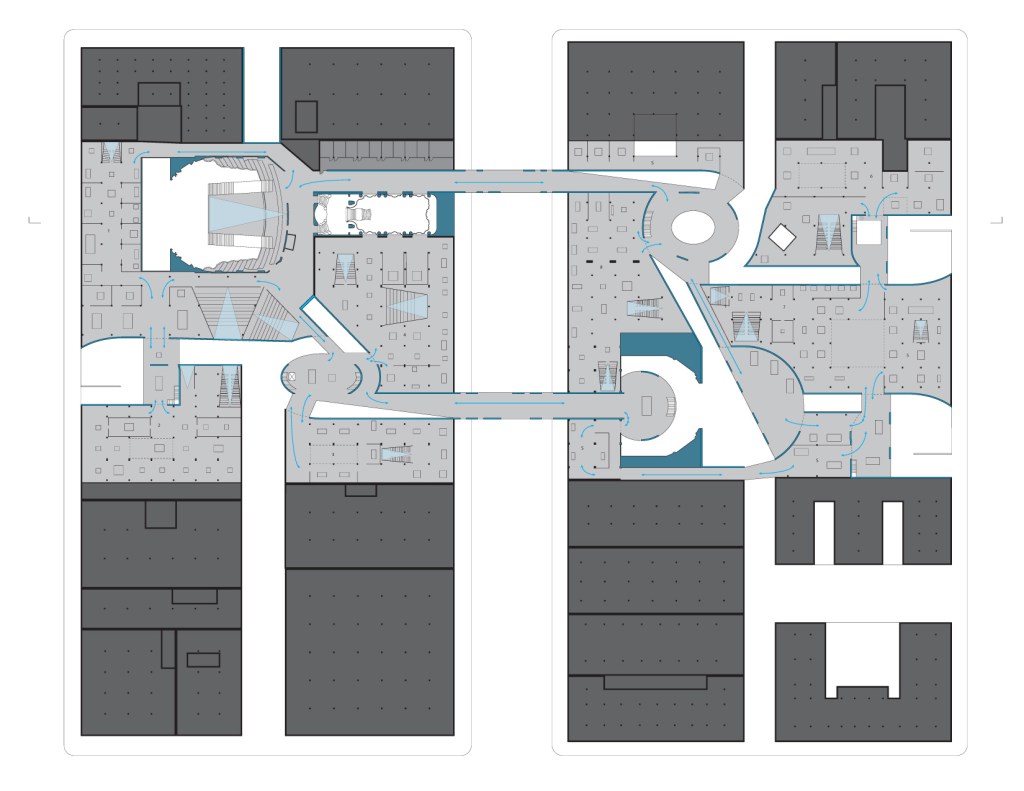
The voids serve as places of connection between members of the public, and between the public and the institution. Visitors “condense” around publicly available museum displays, or programmatic attractors:
Revision
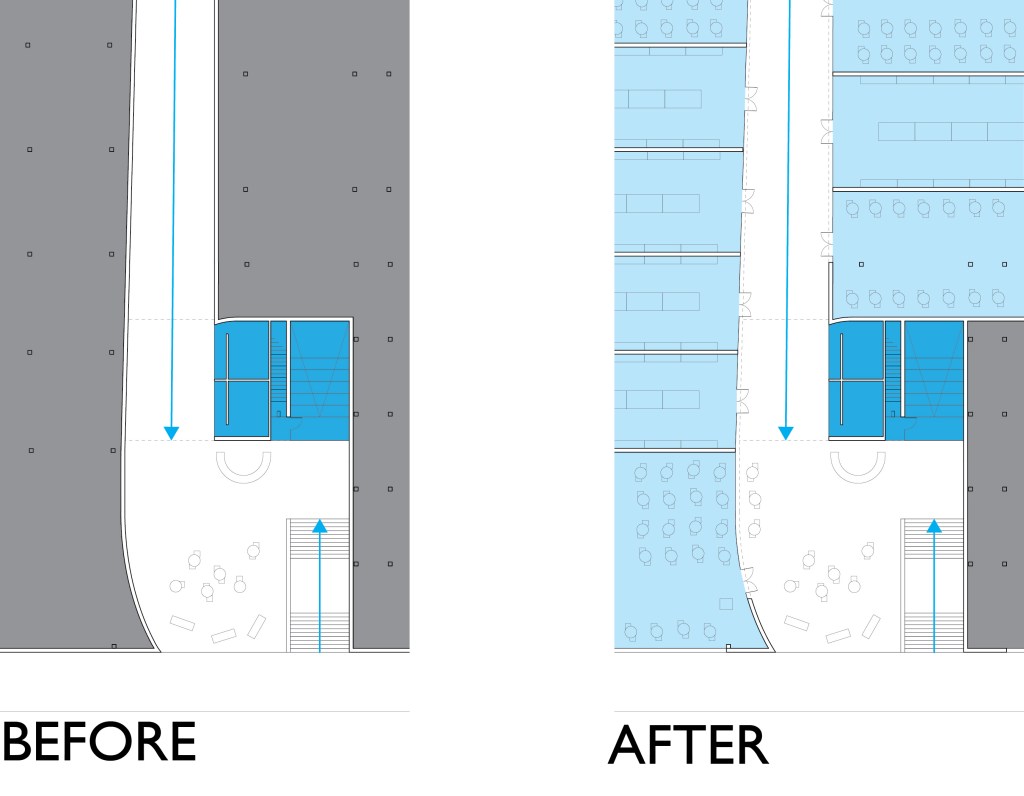
Cultural Condensers rely on Programmatic Attractors to bring in the public, but museum displays will not be enough to entice Los Angeles pedestrians to enter an otherwise barren concrete canyon.
Rather, these Attractors should be expanded to include the program which makes streets come alive: restaurants, cafes and shops; also, plantings, seating and fountains. (Shade is already available.) Assuming adequate pedestrian traffic, these changes will make the Condensers successful additions to the neighborhood.
Does this change make the public space commercial rather than cultural? No; rather, it makes that space fully public, rather than institutional.
The museum, with its glimpses of past Hollywood glories, offers context for the contemporary experience of Los Angeles, deepening that experience’s significance. But that experience remains one of contemporary life in all its richness, not just of old movies or artefacts in a glass case.
 NCS Portfolio