US New Embassy Compound for Dublin, Ireland. Fall 2024. Self-directed. Sketchup, Rhino, Enscape, Illustrator.
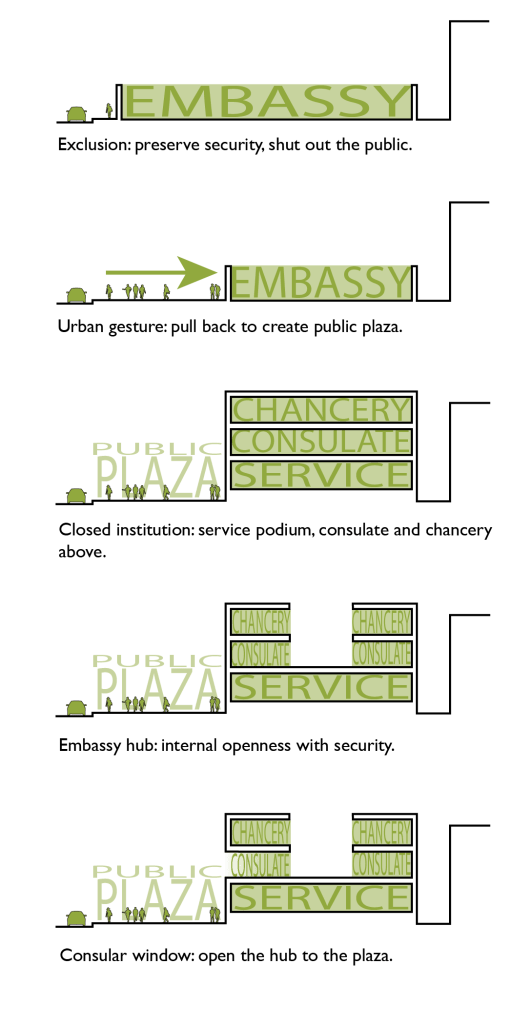
Embassy design balances openness and security, projecting an image of friendliness while protecting embassy staff from terrorism and civil unrest. US embassy design has run this gamut over the past 70 years from the optimism of midcentury designs to the formulaic paranoia of Secure Embassy Design after 9/11; now, “Design Excellence” guidelines encourage the union of the two extremes. Plans for a new 400-employee US embassy in Dublin raise critical issues regarding the interaction between security and diplomacy in an urban context.
The answer to this conundrum is the “urbane embassy”, selectively open to its context while preserving diplomatic secrets behind a blank facade. The embassy will pull back from one half of the site to create the “embassy green”, an urban plaza welcoming to all. It meets this plaza with an “urban wall” which is selectively open to provide security and engagement through “eyes on the plaza”. The building should be civic in character, resembling an art museum more than an office building.
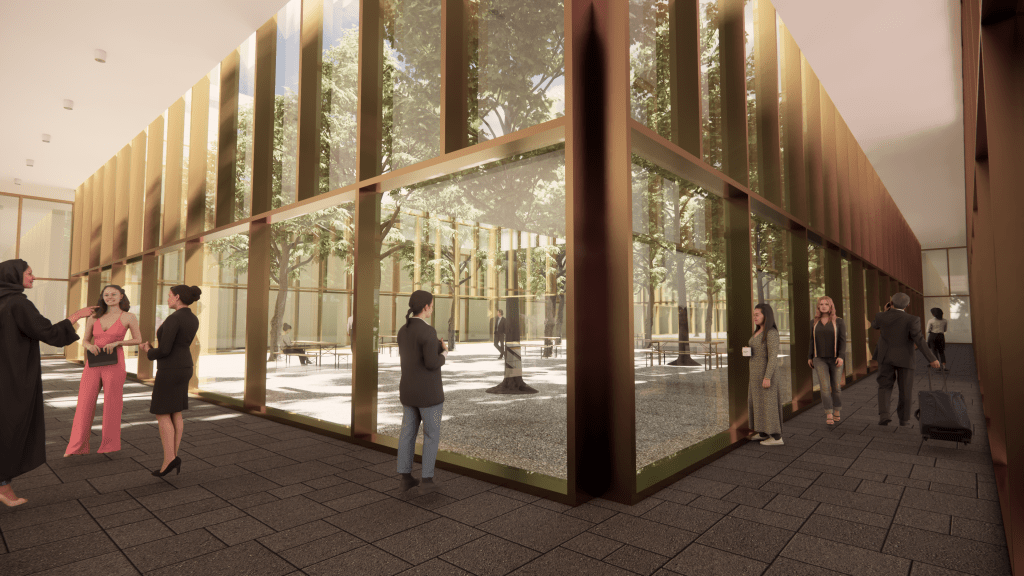
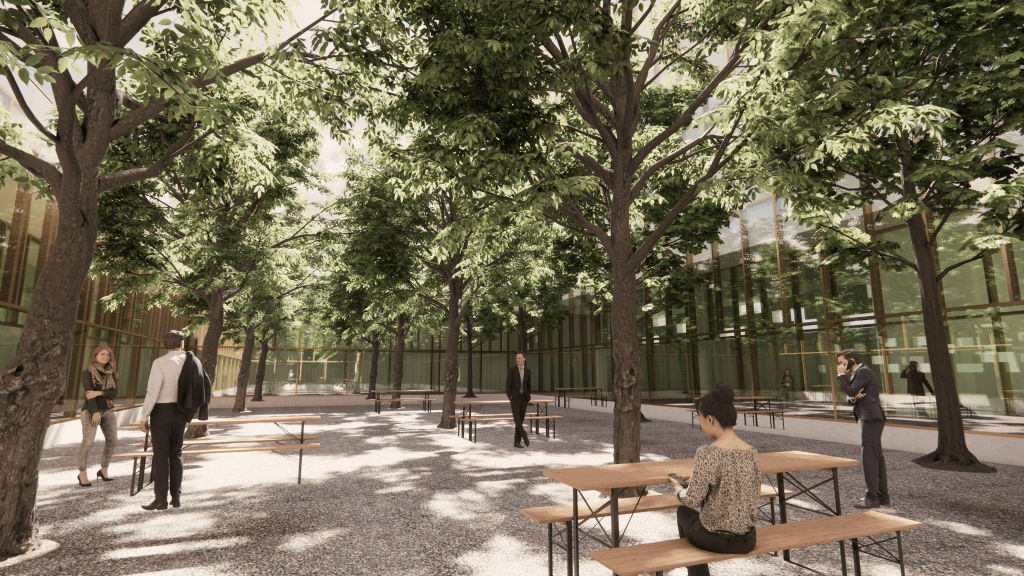
Inside, the embassy revolves around the courtyard or “embassy hub”, a green, secluded space providing physical and psychological security for embassy staff.
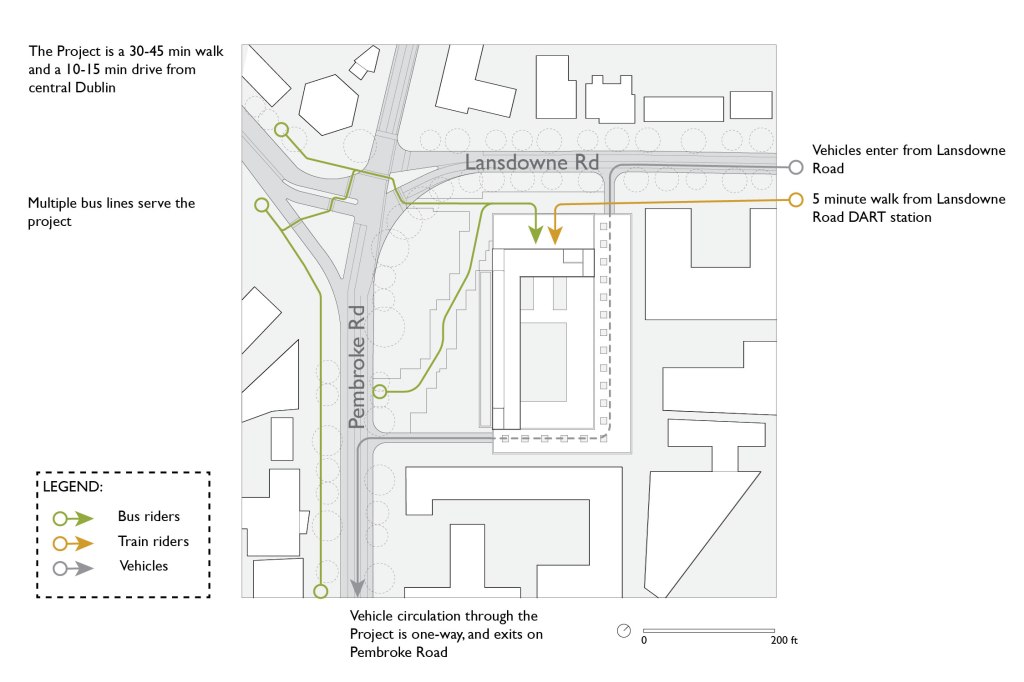
Occupying a prominent corner location in Dublin’s architecturally diverse and embassy-heavy Ballsbridge neighborhood, the new embassy rubs shoulders with modern office buildings and Victorian rowhouses, matching its immediate neighbors in scale and complying with the spirit of Dublin’s zoning code. The site, purchased by the US government for the project in 2023, is just down the street from the existing US embassy.
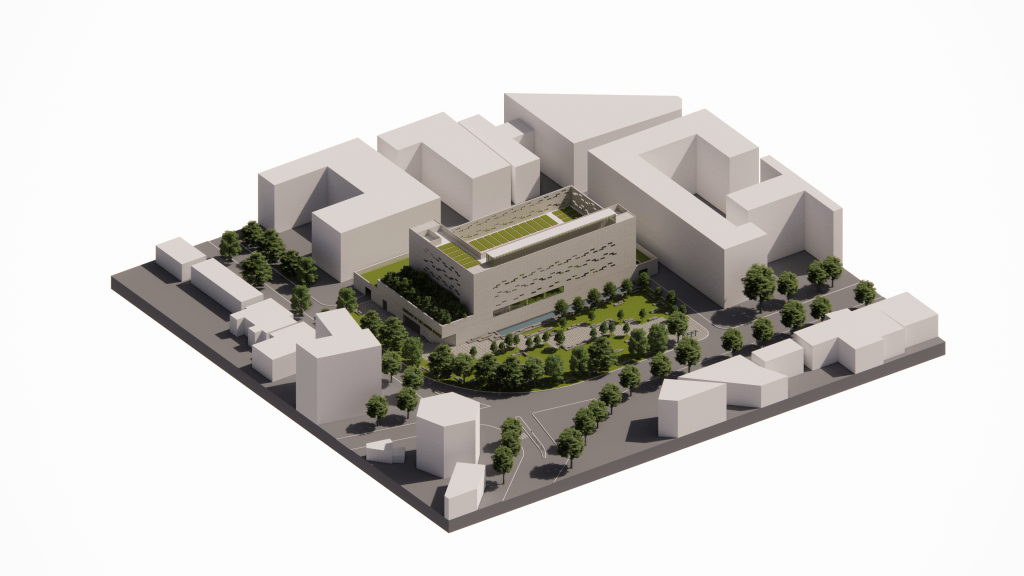
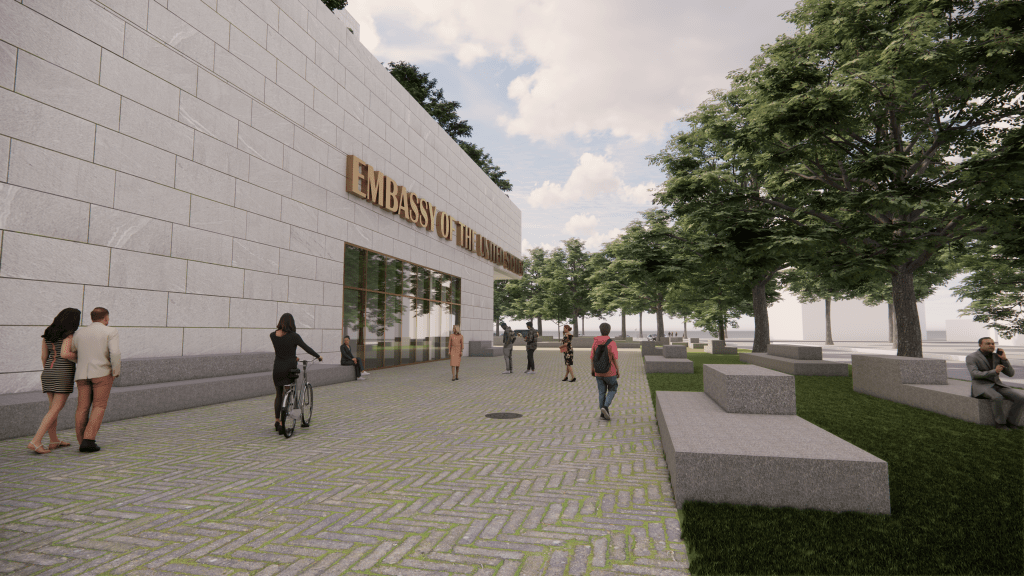
The embassy makes the “urbane” gesture of pulling back its perimeter to create the “embassy green”, a space for musicians and children to play, couples to meet, and office workers to have their lunch:
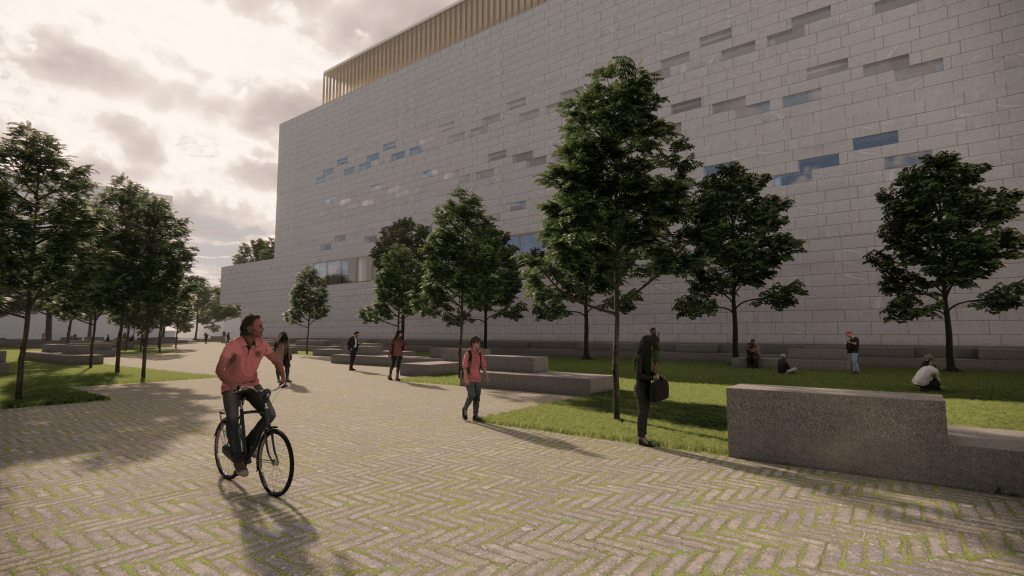
The “urban wall” of the southwest facade is relieved by a pattern of fenestration lighting the chancery offices. Above, the “crown” skylights conference rooms on the top floor:
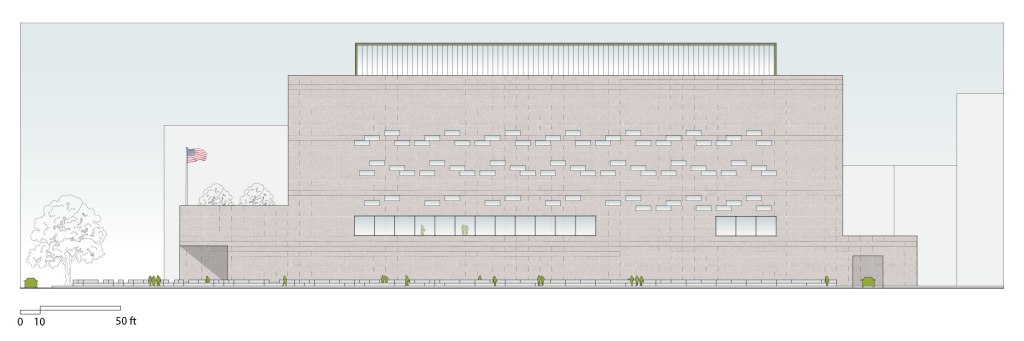
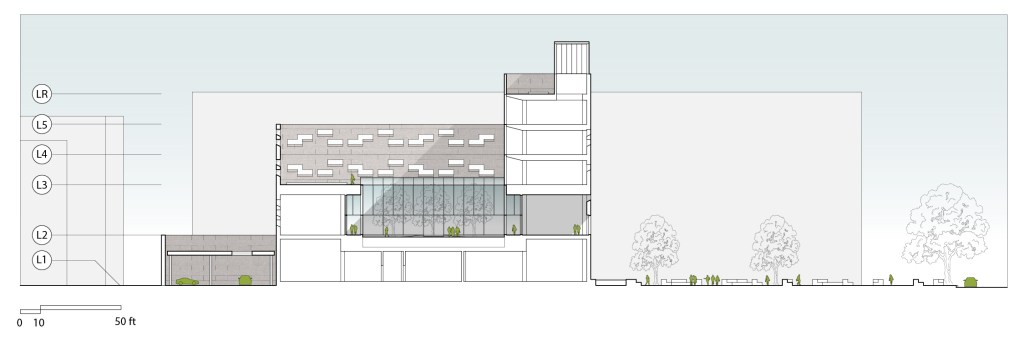
The courtyard level opens up onto the plaza through the “consular window”, which displays the consulate waiting room to the public and promotes a selective visual connection between interior and exterior:
On the northwest side, the embassy scales down to meet the street, while still maintaining a safe standoff distance. Granite benches and street trees serve as discrete anti-vehicle protection:
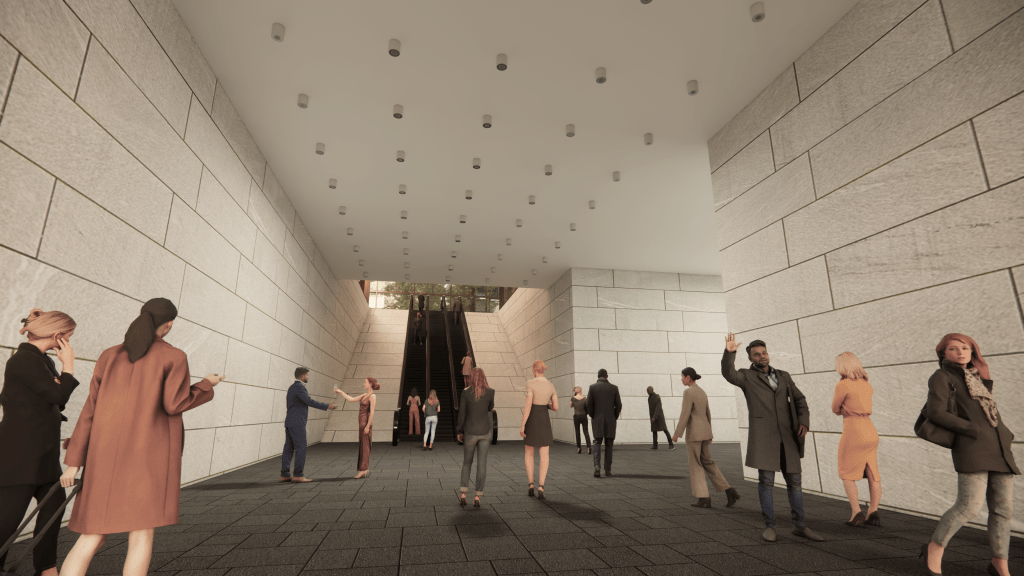
Visitors and staff enter from the northwest side of the building, and move through security screening to ascend an escalator to the courtyard level:
Level 1 is a podium level containing service program; the service court with vehicle access and parking is in back. Only the lobby is semi-public, open to screened visitors. Penetrations of the perimeter are limited to the lobby, the mailroom, and vehicle entry and exit gates. For all its urbanity, this is a secure building:
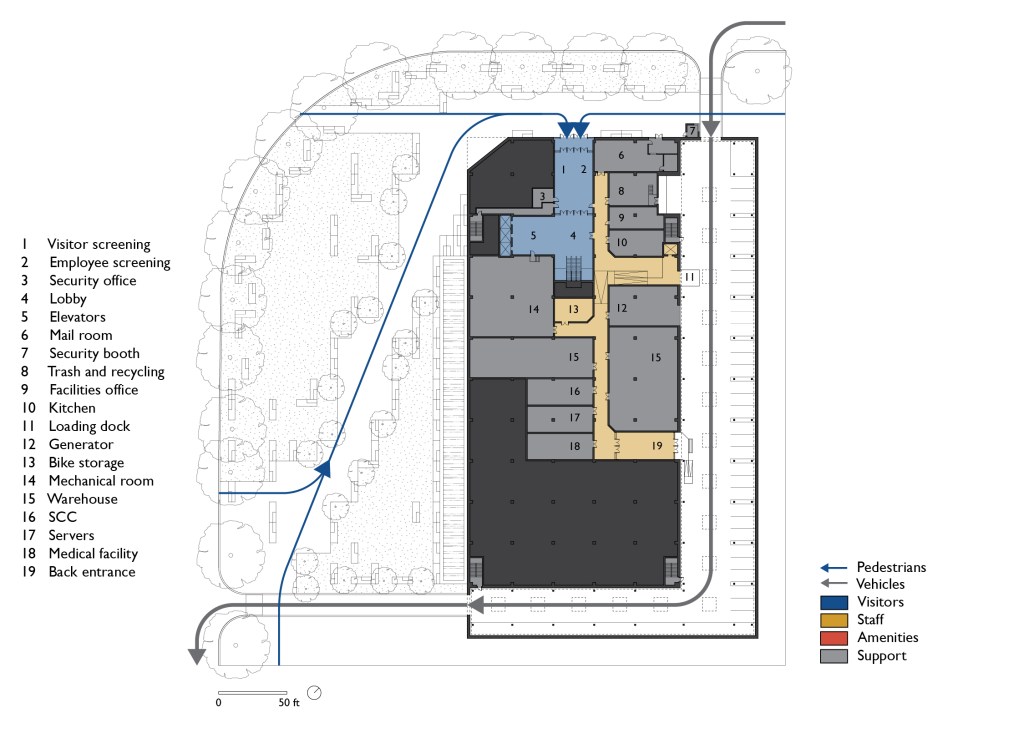
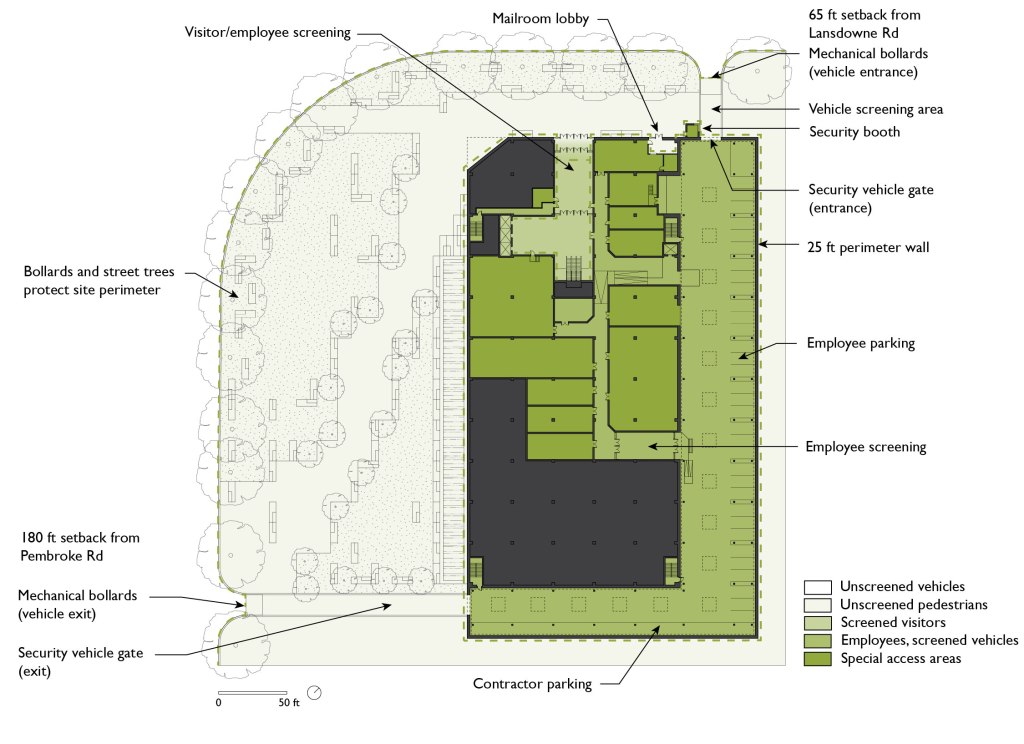
Visitors flow up escalators from the street into the main courtyard level:
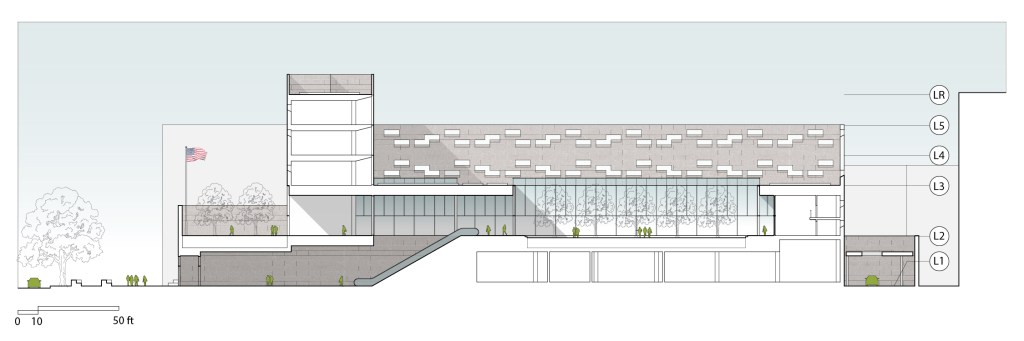
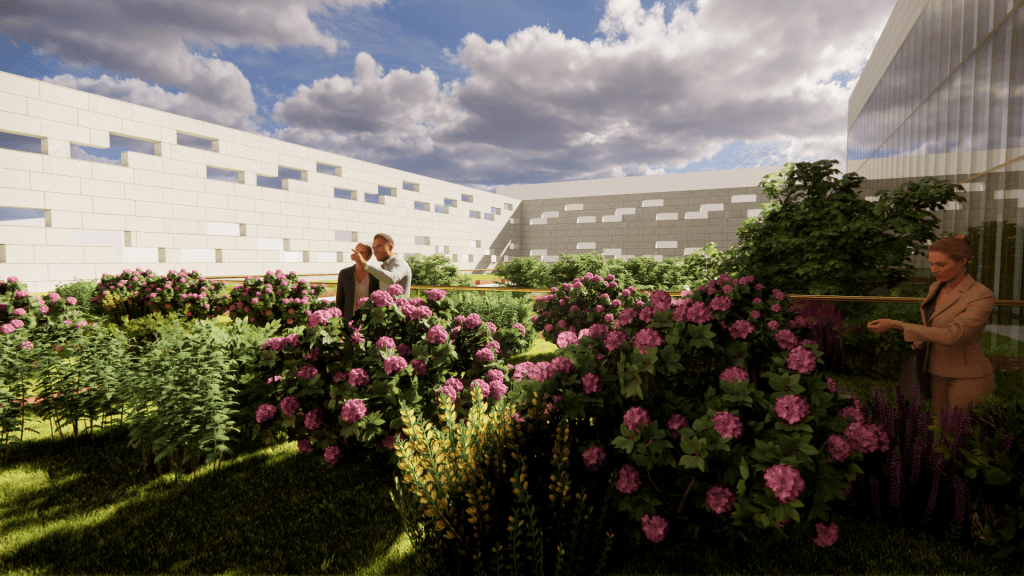
The embassy’s main level centers around the “embassy hub”, a green space including the courtyard, the cafeteria terrace and the roof terrace above on Level 3. Chancery offices face this terrace on Levels 3-5.
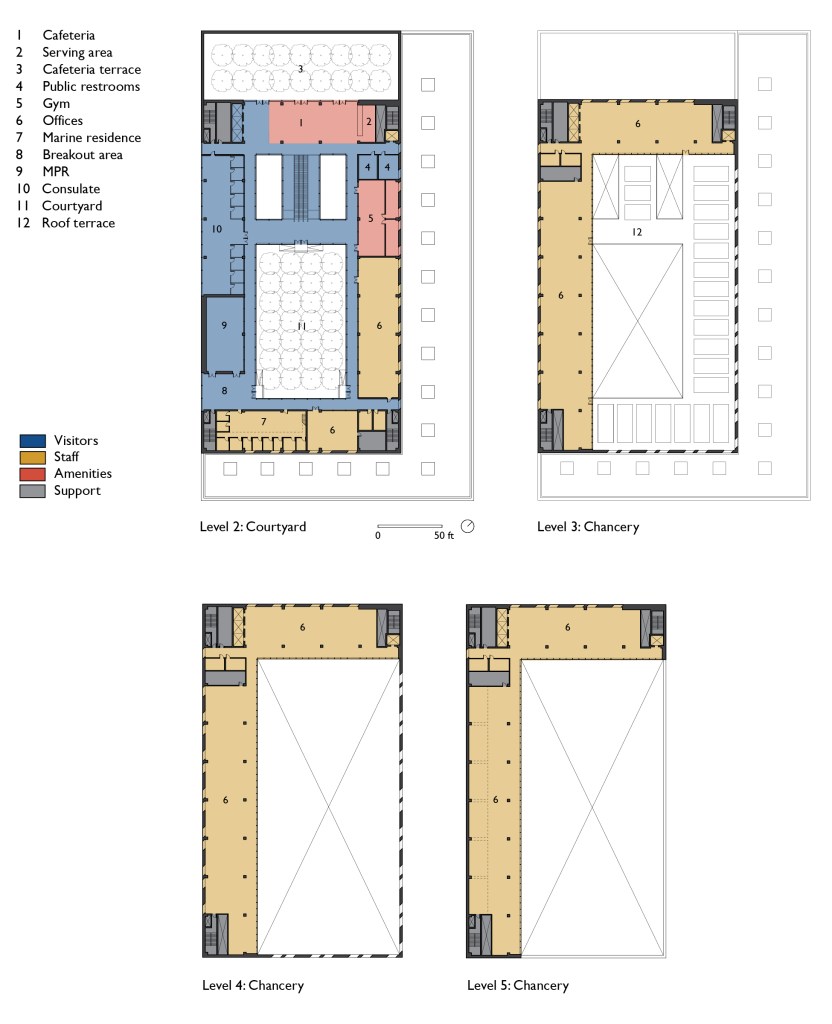
The courtyard is the center of the embassy’s public level; the roof terrace above is a “secret garden” for embassy staff.
By making the “urbane gesture” of pulling back its perimeter to create a public “embassy green” while also providing staff and visitors with a secure and secluded green hub in the center of the building, the new Dublin NEC successfully balances an embassy’s needs for security and openness.
 NCS Portfolio